The age of the best performance in ultra-cycling

Age and gender difference in non-drafting ultra-endurance cycling performance - the ‘Swiss Cycling Marathon’ We have analyzed the performance of all finishers at ‘Swiss Cycling Marathon’ from 2001 to 2012 at the 720km route as qualifier for the RAAM. If one compares the times of the fastest men and women, the difference was 13.6% for the fastest finishers, 13.9% for the three fastest men and women and 19.1% for the ten fastest men and women. The difference between the fastest three men and women decreased from 30.5% in 2001 to 20.4% in 2012.The fastest women were over the years faster while the fastest men could not improve their performance.

Read more
Differences in age-related power of power in the short-distance triathlon

The age-related decline in Olympic distance triathlon performance differs between males and females We have examined the performance of men and women in the short-distance triathlon ‘Zurich Triathlon’ from 2000 to 2010 with respect to the difference between the sexes. Between 18 and 34, men like women were able to achieve the same conclusion.We were able to make an interaction of age and gender on swimming, cycling and total time, but not on running.

Read more

Calculation of the expected runtime in the marathon

Marathon performance in relation to body fat percentage and training indices in recreational male runners For male marathon runners, there are various characteristic features that correlate significantly with the competition time. On the basis of 126 finishers at the Marathon in Basel of 2010 and 2011, Prof. Giovanni Tanda from Genoa has classified the variable weekly training kilometers, running speed and percent body fat as relevant. With these variables you can now calculate with a same the marathon time relatively very precisely.The formula is: Marathon time (min) = 11.03 + 98.46 exp (-0.0053 middle weekly running kilometers [km / week]) + 0.387 middle running speed (sec / km) + 0.1 exp (0.23 percent body fat [%]). The whole article can be found under https://www.dovepress.com/articles.php?article_id=13175

Read more

Trend of participation in the Inline 111

Age group athletes in inline skating: decrease in overall and increase in master athlete participation in the longest inline skating race in Europe - the Inline One-Eleven. The ‘Inline 111’ was the longest inline race in Europe.We examined the trend of participation from the first issue in 1998 until the last discharge in 2009.By 2003, the number of participants rose, after 2003 they decreased. Throughout the period, the number of skaters decreased under 40 years, while the number of skaters increased over 40 years.

Read more

How are half marathon and marathon runners differ?

Comparison of Training and Anthropometric Characteristics between Recreational Male Half-Marathoners and Marathoners Half marathon and marathon are popular trolls.We have compared the training as well as aspects of body construction between 147 male half marathon and 126 male marathon runners. The half marathon runners were heavier, had longer legs, thicker upper arms, a higher body fat and a larger muscle mass than the marathon runners.Compared to the marathon runners, they showed less running experience in the sense of a few years, less weekly running kilometers and less weekly running hours. A deep body mass index, a deep body fat and a high running speed in training were the most important variables for a quick half-marathon period.With the marathon runners, this was a deep body fat and a high running speed in training.For the half marathon runners, the Body Mass Index explained only about 2% of the competition time.

Read more

Performance differences between mountain and city marathon

Reduced performance difference between sexes in master mountain and city marathon running The development of performance for so-called Master Runners has been studied in the area of Marathon only for city marathons. We now compared the performance of older runners at a city marathon (Lausanne Marathon) and a mountain marathon (Virgin Marathon) between 2000 and 2011. In both competitions were most participants between 35-44 years old. In the Virgin Marathon, the number of women took over 35 years to leaving the number of women under 35 years.For men there was no change over the years. In the Lausanne Marathon, on the other hand, no change in women during men decreased the number of finishers in the age groups of 25-44 years.Women in Lausanne Marathon improved performance in the age groups 35-44 and 55-64 years, men improved in the age groups 45-54 years in both marathons. Women were able to reduce the difference between the sexes in the age groups for 45-54 years in both marathons as well as in the age groups 35-44 years in the Virgin Marathon.

Read more

Change in body compartments on the transseuropal

Characteristics, changes and influence of body composition during a 4486km transcontinental ultramarathon: results from the Transeurope Footrace mobile whole body MRI-project. At Transseuropalauf 2009, a group of runners with a mobile MRI was examined before, during and after the run. The individual body compartments were examined in detail. The crucial results were that the runners lost about half of their body fat during the race.Also bold mass (muscle mass) was lost.

Read more

Performance Development in Badwater and Spartatlon

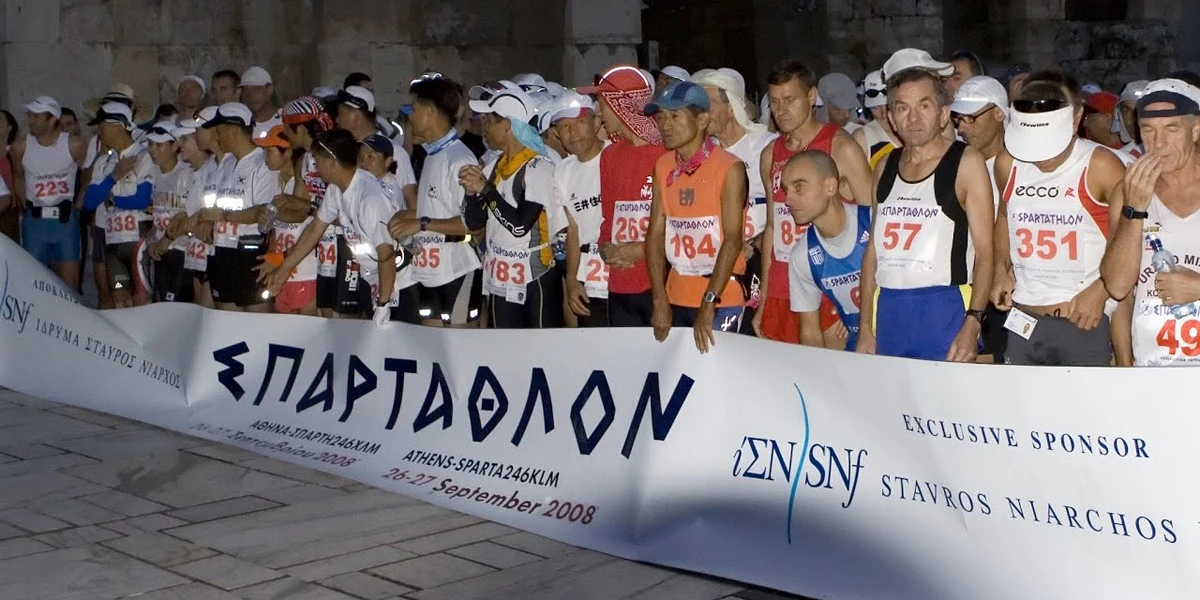
Participation and performance trends in ultra-endurance running races under extreme conditions - ‘Spartathlon’ versus ‘Badwater’ We have examined the development of participation and performance in the two ultramarathons ‘Badwater’ and ‘Spartatathon’ between 2000 and 2012. In both competitions, the number of participants increased over the years.Women make around 21% in the ‘Badwater’, in the ‘Sparthlon’ about 11%. In the ‘Badwater’ the male finishers were 46 years old, in the ‘Spartatlon’ by 45 years.The women were in the ‘Badwater’ by 43 years, in the ‘Spartatthlon’ by 44 years.In both runs, men like women were faster than women faster.

Read more

The elite on the Ironman Hawaii is older but still faster

Elite triathletes in ‘Ironman Hawaii’ get older but faster In an earlier work we were able to show that the age-class patients at ‘Ironman Hawaii’ were getting better over the years. The question now turned out if the top of the ‘Ironman Hawaii’ was better.As expected, the top ten over the years became more and better.

Surprisingly, the peak people over the years were also older. The age of the top ten in women rose from 26 ± 5 years in 1983 to 35 ± 5 years in 2012.For men, the age of 27 ± 2 years rose to 34 ± 3 years.According to definition, the top ten on the ‘Ironman Hawaii’ would have already been divided as ‘Master Athletes’. The whole study can be found under https://pubmed.ncbi.nlm.nih.gov/23591938/

Read more